Surviving the Telemetry Tsunami: Why Human-Led Incident Response is Obsolete
Published: 26 June 2026
The transition to deeply distributed, highly dynamic multi-cloud architecture was built upon a fundamental promise: unprecedented agility and resilience. To ensure this reliability, modern infrastructure was engineered to be intensely observable. Every container interaction, database query, microservice hop, and edge-node authentication was designed to generate rigorous log metrics.
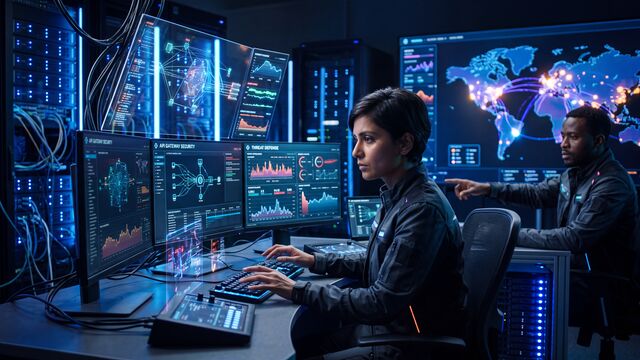
However, this relentless pursuit of total observability has triggered a severe secondary crisis. The absolute explosion of observability data cascading across the enterprise has manifested into a devastating “telemetry tsunami.” For Site Reliability Engineers (SREs) and IT operations teams, this sheer scale and velocity of data have broken the foundational processes of IT management. Human-led operational triage is no longer just difficult; it has become mathematically impossible.
Drowning in Contextless Data
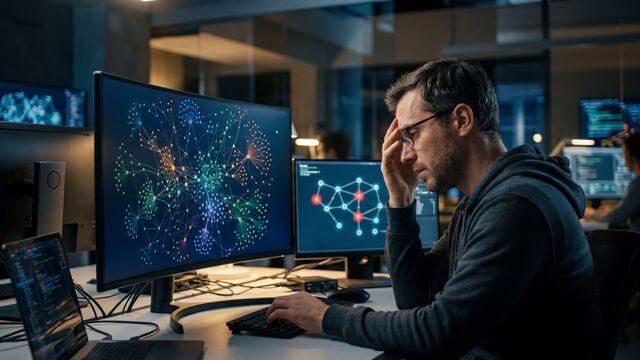
The root of this crisis is cognitive overload. When a critical application failure occurs in a monolith application, finding the root cause is roughly analogous to reading a book to find a plot hole. When a failure occurs across a globally distributed, Kubernetes-managed, multi-cloud environment, discovering the root cause is equivalent to finding a specific drop of water in the ocean while being hammered by a hurricane.
During a complex incident, thousands of disparate alerts fire simultaneously across dozens of different observability dashboards. Network latency spikes, database queues fill, and CPU metrics peak. Human engineers are forced to manually correlate thousands of abstract metrics spanning distinct network environments, wildly copying query IDs between different, siloed monitoring tools.
Because the human mind cannot simultaneously process thousands of dependent variables, engineers inevitably rely on intuition and “tribal knowledge” rather than deterministic data analysis. This approach results in crushing mean-time-to-resolution (MTTR) rates, excruciatingly lengthy war-room sessions, and massive, unrecoverable revenue loss for the enterprise.
The Automation Imperative: Graph Analytics and Machine Learning
The only way to survive the telemetry tsunami is to completely extract human cognition from the initial triage process. Incident response must immediately pivot away from human-led dashboard monitoring toward instant, automated root-cause analysis via machine learning.
The engine of this transformation is advanced IT Graph Analytics. Instead of viewing infrastructure as a list of independent servers, a graph-based AIOps system natively visualizes the entire enterprise as a dynamic, deeply interconnected web of dependencies. When a failure occurs, the system utilizes powerful machine intelligence to instantly traverse this massive graph mapping.
The machine does not just see that a node failed; it understands the semantic relationship. It traces the cascade of telemetry backward at the speed of light—connecting a failed user login on the mobile frontend directly to a specific, hidden API integration failure in a third-party cloud provider three layers deep within the architecture. The machine digests five million distinct data points in two seconds, filters out the chaotic noise, and hands the SRE the exact, mathematically proven root cause of the incident.
The End of the War Room
By implementing comprehensive, machine-led triage, organizations effectively destroy the concept of the IT “war room.” Operations shift from panicked, manual hunting to calm, strategic remediation. The machine isolates the problem autonomously, allowing highly paid engineering talent to focus entirely on applying the required architectural fix.
Strategizing and Navigating the Telemetry Flood with Aqon
Transforming a chaotic, incredibly noisy infrastructure into a highly deterministic, automated ecosystem is complex. It requires more than just installing another logging aggregator; it relies on creating a strategic roadmap to fundamentally rewire the nervous system of your enterprise architecture.
Aqon provides the high-level advisory and AIOps orchestration strategies necessary for severely overwhelmed IT departments. We specialize in helping organizations conceptualize the integration of advanced machine learning architectures and graph analytics frameworks. We work closely with your leadership team to define exactly how your infrastructure can autonomously digest data and identify anomalies, guiding you away from human bottlenecks in critical incident response.
Are your engineers drowning in observability noise? Contact Aqon today to explore our strategic consulting services and learn how to map an automated root-cause analysis infrastructure.
Next Up: Shrinking Patch Windows: Why AI-Driven Exploitation Demands Autonomous Defense
Latest Articles