Vibe Coding vs. Engineering Rigor: Managing the Flood of "Good Enough" Code

Published: 13 February 2026
A new term is circulating in the hallways of high-growth tech companies and enterprise IT departments alike: “Vibe Coding.”
Coined to describe the experience of using Large Language Models (LLMs) to generate software through iterative prompting, “vibe coding” is seductive. You describe a feature, the AI spits out code, you see a bug, you prompt for a fix, and within minutes, you have a working prototype. It feels productive. It looks like progress. But for engineering managers and CTOs responsible for systems that must last for years, not hours, it is also terrifying.
The shift toward agent-assisted development is fundamentally changing the Software Development Life Cycle (SDLC). While we are gaining unprecedented speed, we are at risk of losing the engineering rigor that prevents “maintenance debt explosions.” At Aqon, we believe the solution isn’t to block AI, but to evolve the role of the human developer from a “syntactician” to a “system auditor.”
The Allure and Danger of “Good Enough”
In the pre-AI era, code was expensive. It required thousands of human hours to write, test, and document. This high cost created a natural gate: if you were going to invest in building something, you made sure it followed best practices, was modular, and included comprehensive tests.
Today, the cost of generating code has dropped toward zero. This has led to a flood of “good enough” code—code that works for the happy path but lacks the structural integrity to handle edge cases, scale efficiently, or be safely modified by anyone other than the person (or AI) who originally “vibed” it into existence.
The danger of vibe coding is that it prioritizes the demonstration over the design. An AI can write a function that sorts a list, but it cannot (at least not yet) think deeply about how that function fits into a long-term system architecture, how it handles sensitive customer data under high load, or how it will interact with a legacy database ten years from now.
From Syntax to Auditing: The Developer’s New Role
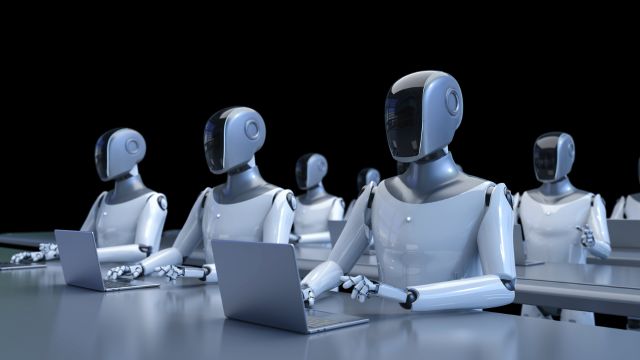
As AI agents take over the “syntactic” work of coding—writing the actual lines of JavaScript, Python, or Go—the human developer’s value is shifting. We are no longer builders of bricks; we are architects of the city.
The “Managerial Developer” is a persona we are seeing emerge among top-tier engineering teams. This developer doesn’t spend their day chasing curly braces. Instead, they focus on:
- Requirement Precision: Ensuring the “intent” provided to the AI is unambiguous and includes non-functional requirements (security, performance, observability).
- Architectural Guardrails: Defining the high-level boundaries and patterns that any AI-generated code must adhere to.
- Critical Auditing: Not just checking if the code “works,” but verifying its “vibe” against rigorous engineering standards.
This shift requires a new mindset. It is much easier to write code from scratch than it is to deeply audit 1,000 lines of AI-generated code for subtle security vulnerabilities or architectural drift. Engineering rigor in 2026 is no longer about typing speed; it is about the intensity and depth of the audit.
Introduction to Agentic QA: Fighting Fire with Fire
If the problem is a flood of AI-generated code, the only scalable solution is to use AI to manage the flood. This is what we call Agentic Quality Assurance (Agentic QA).
In an Agentic QA model, autonomous agents are deployed not to write code, but to audit it. These specialized agents are trained on your organization’s specific coding standards, security policies, and architectural patterns. As soon as an AI (or a human) proposes a code change, the QA Agents run a battery of tests that go far beyond traditional linting:
- Logical Consistency Audits: Does this change contradict existing business logic elsewhere in the codebase?
- Security Context Analysis: Given the specific permissions this module has, does this new code create an “escalation of privilege” risk?
- Resilience Simulation: If this specific service fails or lags, how does the AI-generated code handle the exception?
By embedding Agentic QA into the CI/CD pipeline, organizations can maintain the speed of “vibe coding” without sacrificing the rigor of professional engineering.
Bridging the Gap with Aqon
The transition from human-centric coding to agentic orchestration is the most significant shift in software engineering since the invention of the compiler. It is not enough to simply hand your team a Copilot subscription and hope for the best. To succeed, you need to rethink your entire SDLC.
At Aqon, we advise engineering leaders on how to navigate this transition. We focus on the architectural governance and the evaluation of Agentic QA processes that allow you to harness the power of AI while maintaining the rigor your business demands.
Is your codebase becoming a collection of unmanageable “vibes”? Contact Aqon today to learn how we can help you implement Agentic QA and restore engineering discipline to your AI-accelerated development process.
Next Up: Agentic Maturity Models: Are You at Level 1 (Chatbot) or Level 5 (Organization)?
Latest Articles